Faculty


Laboratory
Nano-Biomedicine Drug Delivery Laboratory
Prof. Kang, Mi Kyung
Location
Room 656, Building B, Hana Science Hall
Tel
+82-2-3290-5681
Overview
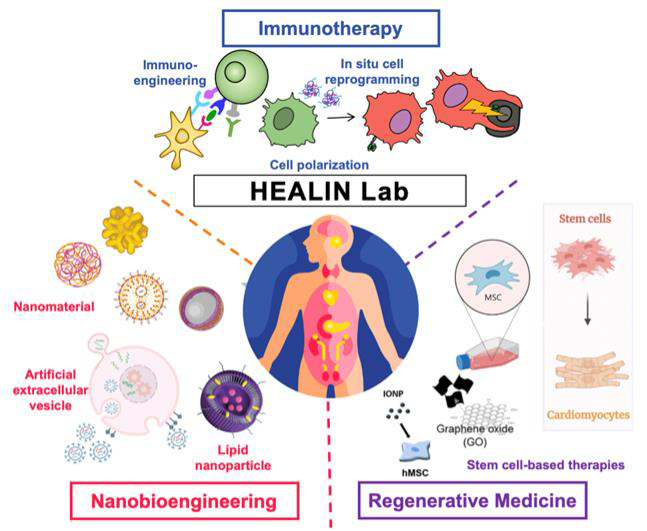
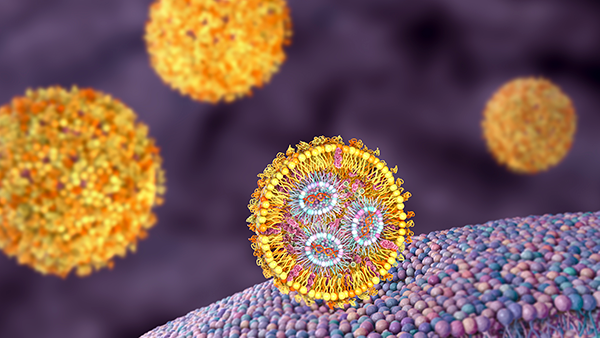
The Nano-Biomedicine Drug Delivery Laboratory develops nanotechnology-based biomedical systems for disease prevention and treatment. The lab focuses on designing and applying various nanobiopharmaceuticals for healthcare applications, particularly for cancer and degenerative diseases.
Key research efforts include therapeutic vaccines, immune-cell-targeting nanoparticles, photo-responsive materials, and in vivo CAR cell-inducing therapeutics. The ultimate goal is to develop advanced drug delivery systems for precise and effective treatment.
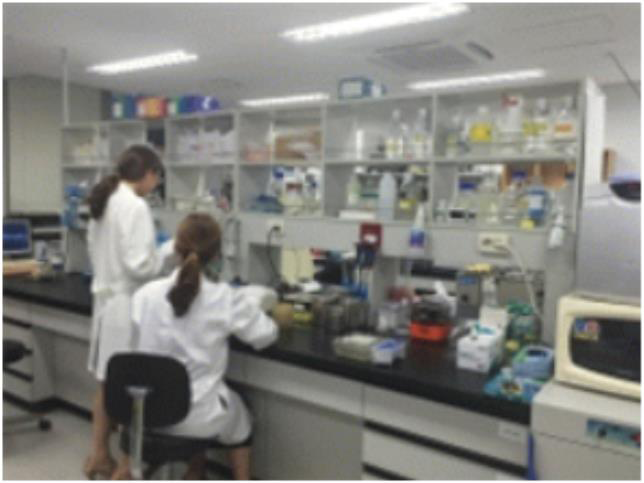
The lab conducts multidisciplinary research spanning nanoparticle synthesis (organic/inorganic), cell culture, molecular biology, immunological analysis, and in vivo animal studies.
Main Research Areas
- Development of immunomodulatory nanomedicines
- Bio-inspired biomimetic therapeutic agents
- Synthesis of infrared- and radiation-responsive nanomaterials
- Drug delivery systems for chronic disease treatment
- Gene therapy development and efficacy evaluation
Molecular Diagnostics & Environmental Microbiology Laboratory
Prof. Kim, Suhng Wook
Location
Room 655, Building B, Hana Science Hall
Tel
+82-2-940-2784
Overview
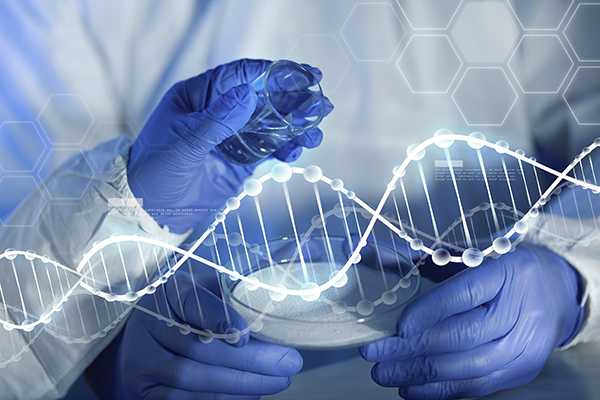
The Molecular Diagnostics & Environmental Microbiology Laboratory focuses on molecular diagnostic techniques based on DNA amplification to detect genetic changes. The lab applies these methods to the diagnosis of various genetic diseases, cancer detection, blood type identification, and pathogenic microorganism diagnostics.
In parallel, the lab investigates antibiotic-resistant microorganisms and functional environmental microbes at the molecular level, with applications in environmental remediation and public health.
Main Research Areas
- Cancer, blood type, and genetic diagnostic research
- Microbial pathogen detection and diagnostics
- Thermostable enzyme research
- Functional environmental microorganisms
- Prenatal genetic diagnosis
- Relationship between environment and disease
Neurorehabilitation Laboratory
Prof. Kim Junesun
Location
Room 654, Building B, Hana Science Hall
Tel
+82-2-940-2805
Overview
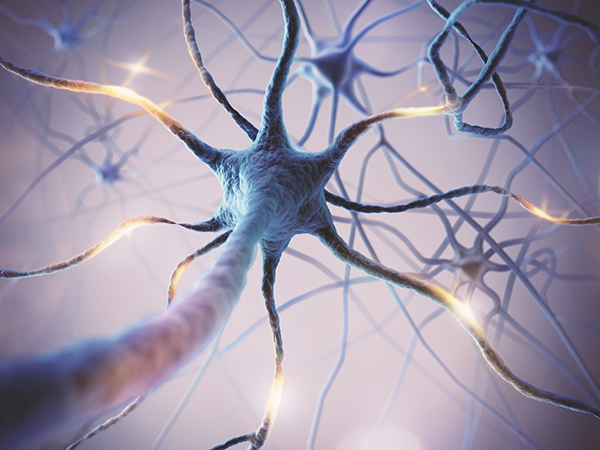
The Neurorehabilitation Laboratory studies pathological mechanisms following nervous system injury, including neuropathic pain, spasticity, and loss of motor function. The lab investigates neural tissue regeneration mechanisms and evaluates the effects and underlying mechanisms of rehabilitation interventions.
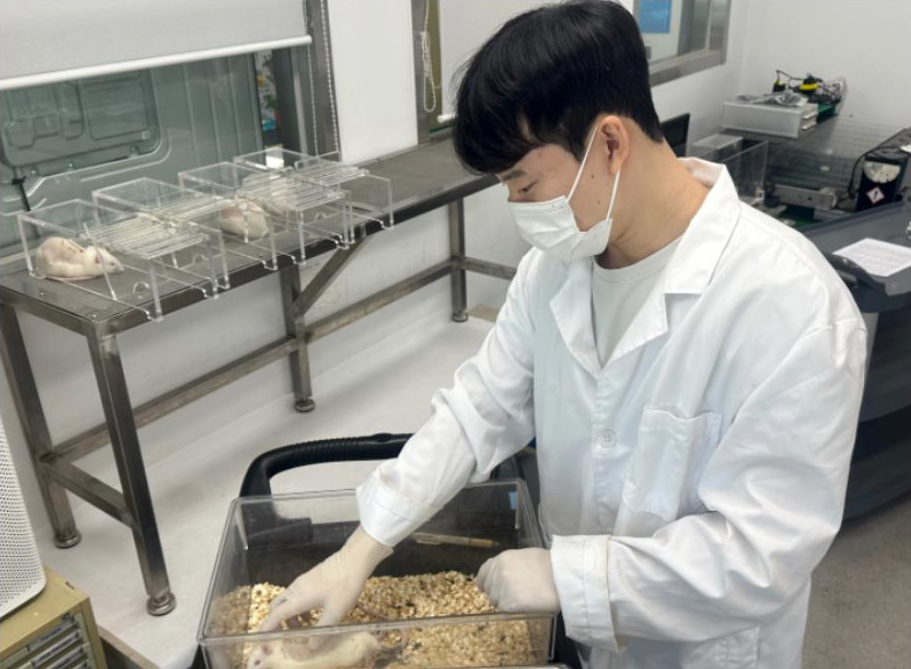
Research is conducted using animal models of neural injury, combined with behavioral and motor function analysis, as well as examination of related changes in the nervous, muscular, and musculoskeletal systems. Based on these findings, the lab aims to clarify the therapeutic mechanisms and effectiveness of rehabilitation strategies.
In addition, the lab develops community-based integrated healthcare systems through living lab–based clinical validation with elderly populations in Seongbuk-gu, focusing on continuous care and smart healthcare services.
Main Research Areas
- Neuropathic pain mechanism
- CNS&PNS Nervous system
- Osteoarthiritis pain and therapeutic intervention
- Denervation induced-muscle atrophy
- Human studies: IoT-based integrated community healthcare systems for healthy aging
Biomechanics and Movement Rehabilitation Laboratory
Prof. Kim, Hyeong-Dong
Location
Room 274, Building B, Hana Science Hall
Overview
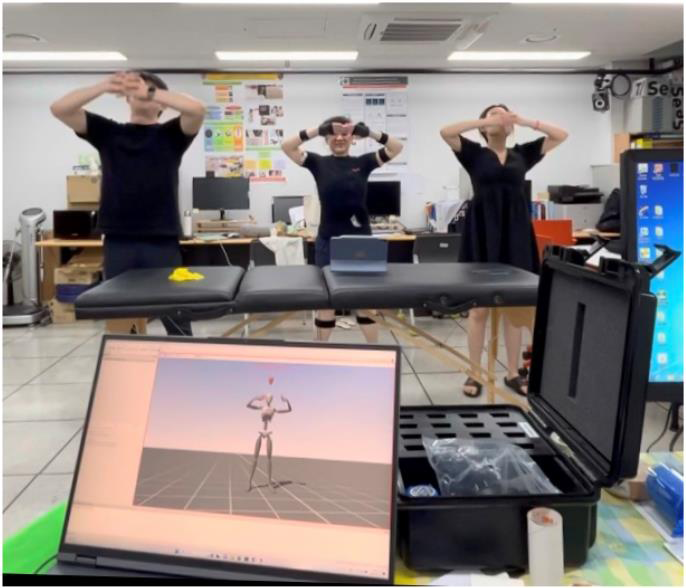
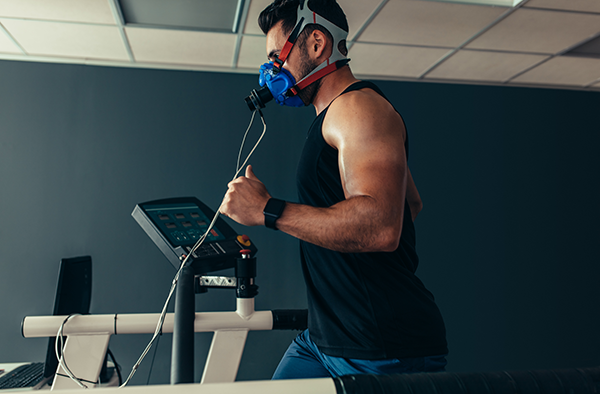
The Biomechanics and Movement Rehabilitation Laboratory analyzes human movement using biomedical measurement systems. The lab quantitatively evaluates joint motion in the spine, upper limbs, and lower limbs during physical activity, as well as the muscles involved in joint control.
Using reflective markers placed on specific anatomical landmarks and infrared camera-based motion capture systems, the lab measures kinematic and kinetic variables such as joint angles, velocity, acceleration, and joint moments. Based on these data, it assesses abnormalities in segmental and whole-body movement patterns.
Main Research Areas
- Clinical Biomechanics
- Geriatric Physical Therapy
- Neurological Rehabilitation
- Balance and Orthopedic Physical Therapy
Water Environment Laboratory (WE Lab)
Prof. Jeon, In Hyeong
Location
Room 662, Building B, Hana Science Hall

Overview
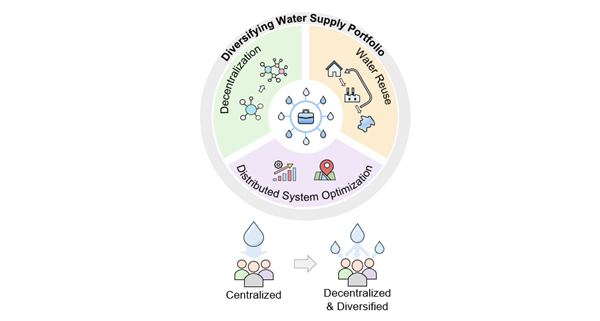
Conventional water supply systems are under increasing pressure from growing water demand, deteriorating water quality, and climate-driven supply variability. The Water Environment Laboratory (WE Lab) develops sustainable and resilient water supply systems that enhance water security against these mounting challenges. Centered on water reuse and decentralized, modular treatment systems, WE Lab explores diverse water supply portfolio alternatives through process modeling, optimization, and pilot-scale validation. By quantitatively assessing real-world applicability through technoeconomic assessment, we provide actionable water supply solutions that inform policy and decision-making.
Main Research Areas
- Water Reuse (e.g., potable reuse, industrial wastewater reuse)
- Eco-friendly decentralized water treatment
- Process modeling and technoeconomic assessment
- Water supply diversification
Environmental Science Technology Laboratory (EST Lab, est. 2020)
Prof. Woen, Seung Hyun
Location
Room 665-A, Building B, Hana Science Hall
Overview
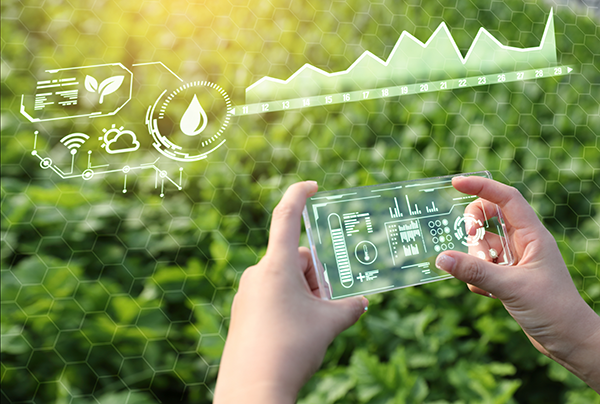
Given that humans spend more than 90% of their time indoors, indoor air pollution has become a major contributor to health risks. The Environmental Science Technology Laboratory addresses these challenges by developing advanced air purification technologies and assessing health risks associated with indoor environments.
The lab evaluates major pollution sources in various indoor spaces and develops integrated air pollution reduction and measurement technologies. Ultimately, it aims to establish a new paradigm of “Customized Air Purification” tailored to different environments and needs.
Main Research Areas
- Air Quality Management
- Engineering Photocatalytic Air
- Purification Indoor Air
- Quality Control Sensing Techniques for Air Pollutants
- Catalytic Materials for Environmental Applications
- Top-Notch Environmental Technologies Development
Radiation Measurement and Imaging Laboratory
Prof. Lee, Won Ho
Location
Room 277, Building B, Hana Science Hall
Tel
+82-2-3290-1114

Overview
Radiation is widely used across diverse fields including space radiation research, national security (e.g., cargo inspection at airports and ports), medical imaging (X-ray, CT, nuclear medicine), and nuclear power generation.
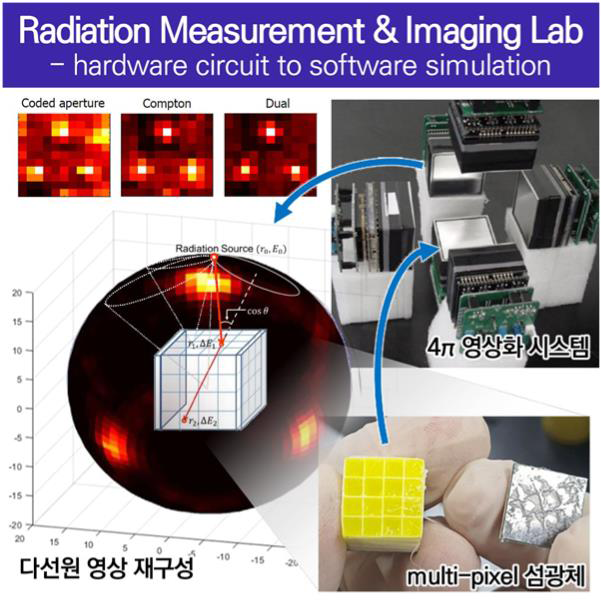
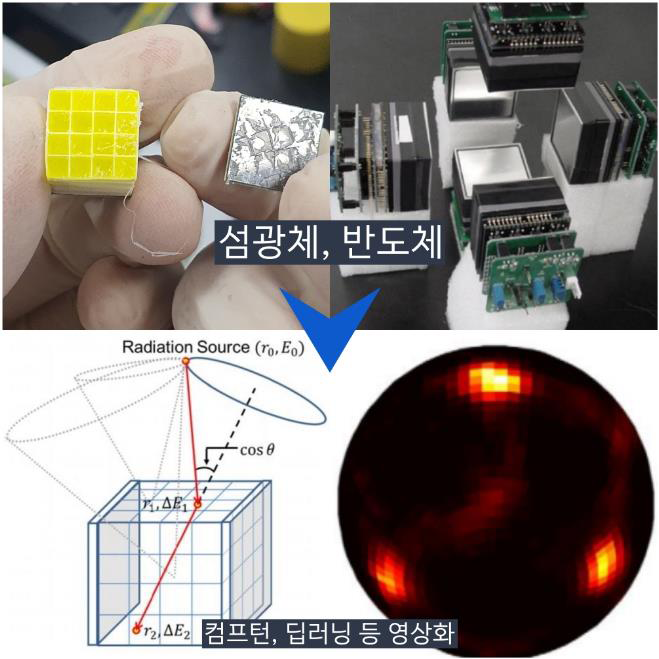
The Radiation Measurement and Imaging Laboratory studies radiation dosimetry, radionuclide identification, and source localization imaging for both industrial and clinical applications. The lab develops advanced radiation imaging systems by integrating scintillators and semiconductor-based nuclear physics with electronic engineering.
On the computational side, the lab performs high-fidelity simulation and applies deep learning techniques for signal processing and image reconstruction, aiming for precise evaluation of radiation responses and their effects.
Main Research Areas
- Radiation detection systems
- Radiation imaging technologies
- Dosimetry (radiation dose measurement)
- Deep learning-based signal and image analysis
Instrumental Analysis & Toxicology Laboratory
Prof. Choi, Jae Yun
Location
Room 266, Building B, Hana Science Hall
Overview
The Instrumental Analysis & Toxicology Laboratory focuses on environmental health and safety, toxicology, instrumental analysis, and the safety evaluation of chemicals found in the environment, food, cosmetics, and household products.
The lab investigates how chemicals and drugs are metabolized and assesses their potential risks to human health through analytical and toxicological approaches.
Main Research Areas
- Environmental Chemical and Drug Metabolism
- Detoxifications
- Antioxidants Instrumental Analysis Toxicity Assessment
- Risk Analysis
- Risk Management of Household Chemical Products
- Environmental Chemicals
- Cosmetics
- Food.. Safety Assessment
- Food Safety
- Cosmetic Safety
ChEEHR Lab (Choi’s Environmental Epidemiology and Health Research (ChEEHR) LabProf. Yoon-hyeong Choi)
Prof. Choi, Yoon-Hyeong
Location
Room 658, Building B, Hana Science Hall
Tel
+82-2-940-2821

Overview
The ChEEHR Laboratory conducts research in environmental epidemiology and exposure assessment to prevent chronic diseases in aging populations. The lab focuses on environmental health broadly, with an emphasis on identifying and evaluating harmful environmental exposures in daily life.
Major risk factors for chronic diseases include environmental exposures, nutrition, lifestyle, and physical activity. The lab systematically evaluates these exposures and investigates how living environments influence disease development.
The ultimate goal is to propose effective prevention strategies and improve public health through evidence-based environmental health research.
Main Research Areas
- Environmental Exposure
- Nutrition
- Human Health
- Epidemiology
- Biostatistics and Big Data
- Public Health
Digital Health Laboratory
Prof. Kang, Ji Seung
Location
Room 666, Building B, Hana Science Hall
Overview
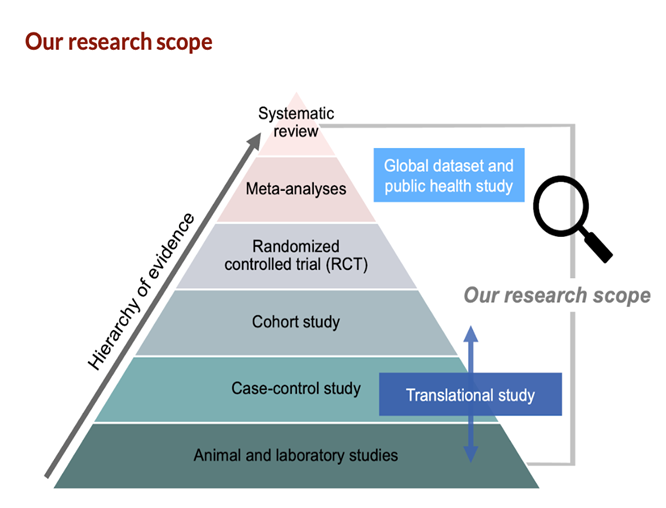
The Digital Health Laboratory at Korea University focuses on leveraging healthcare and biomedical big data to address previously unsolved medical and public health questions.
The lab aims to become a leading global research group in healthcare big data and medical data science. Its research integrates real-world evidence (RWE) and real-world data (RWD), utilizing large-scale datasets such as the Korean National Health Insurance Service database, U.S. healthcare datasets, and Harvard-affiliated hospital data.
The lab has demonstrated strong international research impact, publishing high-impact papers (including BMJ and Nature Communications) and advancing data-driven healthcare innovation.
Main Research Areas
- Real-World Evidence (RWE) / Real-World Data (RWD) research
- Global health databases (WHO, Global Burden of Disease)
- Mathematical modeling and future health prediction
- Digital wearable healthcare platforms
- Machine learning and medical AI foundation models
- Translational brain science focusing on neurodegenerative diseases